

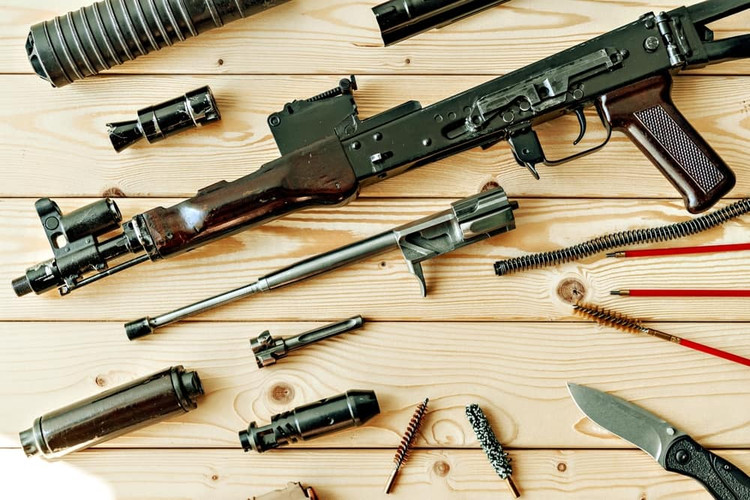
Gun Parts List for Rifles, Shotguns, and Handguns
Posted by EveryGunPart on 2026-11-17
Complete Gun Parts List Hunters Should Know For Different Firearm Types
Rifles, shotguns, and handguns share several basic groups of parts, but the design and function of those parts vary by firearm type. A clear gun parts list gives hunters a useful starting point for identifying major assemblies, understanding replacement listings, and narrowing down the correct parts for a specific firearm.
Common components include the barrel, action, trigger assembly, safety, and stock or grip. Beyond those basics, the exact parts depend on the firearm’s action, manufacturer, model, and configuration.
Complete Gun Parts List For Rifles and Shotguns
Rifles and shotguns share several core assemblies, but the parts within those assemblies vary by platform and action type. Rifles may include a receiver, bolt or other action components, magazine or feeding system, sights, and optic-mounting hardware. Shotguns may use a fore-end, different feeding components, and action-specific parts depending on whether the firearm is pump-action, break-action, or semi-automatic.
| Firearm Type | Major Parts |
|---|---|
| Rifle | Barrel, receiver, action, trigger assembly, stock, feeding components, sights |
| Shotgun | Barrel, receiver, action, trigger assembly, stock, fore-end, feeding components, sights |
| Handgun | Barrel, frame, trigger assembly, grip, action components, sights, feeding components |
Individual firearms also contain smaller springs, pins, screws, controls, and other parts that vary by platform. Hunters who want a closer look at how different components are grouped for a specific firearm can also review complete gun parts kits for restoration projects.
Differences Between Rifle And Shotgun Parts
Rifle and shotgun parts differ because the two firearm types use different ammunition and are built around different actions and configurations. Parts with the same general name may still differ substantially in shape, dimensions, and function.
Rifles generally use rifled barrels, while most hunting shotguns use smoothbore barrels. Rifle and shotgun barrels differ in their internal construction and the ammunition they are designed to use, which also affects related components such as the chamber and feeding system.
Stocks, sights, feeding systems, and other assemblies can also vary according to the firearm’s intended use. The specific manufacturer and model should always guide a replacement-parts search.
Essential Firearm Parts Every Hunter Should Know
Hunters should be able to recognize the barrel, action, trigger assembly, safety, stock or grip, and primary feeding components of the firearms they use. Basic parts knowledge makes product listings, manuals, and conversations with a qualified gunsmith easier to follow.
Action type is especially useful because it quickly narrows the parts associated with a firearm. Terms such as bolt action, pump action, break action, revolver, and semi-automatic describe different operating designs.
Manufacturer and model markings can provide additional clues when identifying parts on older or unfamiliar firearms. Hunters do not need to memorize every internal component; recognizing the major assemblies and knowing the exact firearm model provides a practical starting point.
How Gun Parts Vary By Hunting Firearm Type
Gun parts vary by hunting firearm type because rifles, shotguns, and handguns use different action designs and platform-specific components. Comparing the major differences side by side can help hunters understand which details matter when identifying replacement parts.
| Hunting Firearm Type | Common Action Types | Distinguishing Parts | What To Confirm When Sourcing Parts |
|---|---|---|---|
| Rifle | Bolt action, lever action, semi-automatic | Bolt or action components, stock, feeding system, sights or optic hardware | Manufacturer, model, action, configuration |
| Shotgun | Pump action, break action, semi-automatic | Fore-end on pump models, action components, stock, feeding system | Manufacturer, model, action, gauge, configuration |
| Revolver | Revolver action | Cylinder and related components, frame, grip, action parts | Manufacturer, model, configuration, production details |
| Semi-Automatic Handgun | Semi-automatic | Slide, frame, magazine-based feeding components, grip | Manufacturer, model, configuration, production details |
Understanding Universal Vs Platform-Specific Parts
Very few internal firearm parts should be treated as truly universal. Most replacement parts need to correspond with a particular platform, manufacturer, model, configuration, or production variation. Compatibility is particularly important when evaluating a gun parts kit. EveryGunPart sells parts kits as-is, so buyers should review the listing and included components carefully before purchasing.
Two firearms may both use an extractor, firing pin, safety, or trigger component without using interchangeable versions of those parts. Similar appearance alone is not enough to confirm fit.
Older and discontinued firearms may require additional research because specifications can change during a production run. Product descriptions, markings, part numbers, photographs, and manufacturer documentation can help narrow the options. Owners may also need to spend more time finding rare and obsolete gun parts when standard replacements are no longer available. A qualified gunsmith should evaluate compatibility when there is any uncertainty.
Browse Complete Gun Parts Kits At EveryGunPart
EveryGunPart carries parts and parts kits for rifles, shotguns, handguns, surplus firearms, discontinued models, and other hard-to-find platforms. Explore our selection of parts kits.
—
Disclaimer: This information is provided for educational purposes only. We recommend consulting a professional gunsmith for any repairs, rebuilds, or modifications.
—
Resource:
- https://www.hunter-ed.com/national/studyGuide/Basic-Parts-of-a-Firearm/201099_92796/
- https://www.hunter-ed.com/nevada/studyGuide/What-You-Learned-cont./202034_71679/