
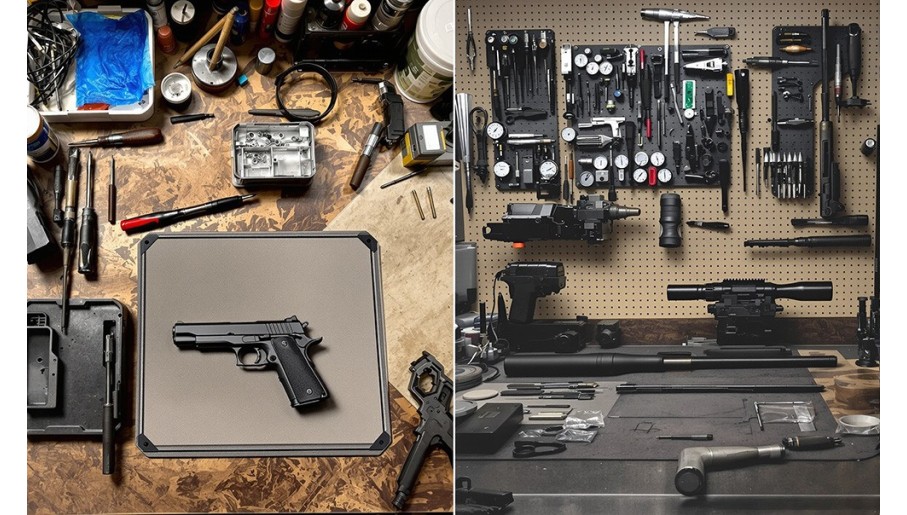
When I first started working on firearms, there were no online guides, no video tutorials, and no endless scroll of opinions to follow. You learned from doing. You learned from mistakes. Some of those lessons were expensive.
Like most DIY gunsmiths, I eventually hit repairs that taught me respect the hard way. Not everything belongs on the home bench, no matter how confident you feel in the moment.
Here is the line I learned over years of work as a DIYer and later as a licensed FFL gunsmith.
The Jobs You Can Handle at Home
These are the tasks that most shooters can do safely with patience and basic tools.
Simple Parts Swaps:
Springs, pins, followers, slide stops.
If the part is designed to drop in or needs light taps with a punch, you can handle it.
Cleaning and Inspection
A clean gun tells you everything about wear, friction points, and possible failures.
Good lighting and a steady bench do more than most high-dollar tools.
Basic Troubleshooting
Feeding issues, extraction problems, and light strikes often come from worn or weakened parts.
If the fix is a simple replacement, you can do it.
Cosmetic Upgrades:
Grips, stocks, handguards, and other non-critical components are simple and safe to work on.
These jobs build confidence. A parts kit from EveryGunPart can turn many of these fixes into a fast and inexpensive repair.
The Jobs You Can Do If You Respect Them
These are possible at home but not casual.
Trigger Work
Installing a drop in unit or swapping springs is fine.
Altering engagement surfaces or angles is not.
That is precision work, not something to guess at.
Barrel and Gas System Adjustments
Adjusting a gas block or installing a muzzle device is normal DIY work.
Cutting, crowning, or re chambering a barrel requires proper tools and proper training.
Fitting Surplus Parts
Cleaning, sorting, and lightly fitting parts from an EGP kit is within reach.
Major shaping or metal removal is where things go wrong fast.
These tasks teach you a lot about how guns work. They also punish impatience.
The Jobs You Should Leave to a Gunsmith
During my decade as a licensed FFL gunsmith, these were the repairs I always told people not to attempt on their own.
Sear and Hammer Geometry
One wrong pass with a file can make the gun unsafe.
This is not the place to experiment.
Headspacing and Chamber Work
You need proper gauges and equipment.
Getting this wrong is a safety issue, not a simple malfunction.
Structural Repairs
Cracks, locking surfaces, and damaged receivers are not DIY tasks.
These are high pressure components that require professional repair.
Professional Finishes
Bluing, parkerizing, and Cerakote can be done at home, but not with the same quality or durability as a proper shop.
Most home finishes look exactly like that.
These repairs demand skill, experience, and the right equipment.
The Questions That Keep You Out of Trouble
Before you touch a part, ask yourself:
- Will this affect safety
- Am I removing metal
- Do I have the correct tool
- Do I know what the final result should look like
- If I am wrong, does the gun still function safely
If you cannot answer confidently, step back.
What Stuck With Me
DIY gunsmithing is about capability, not ego.
Fix what you can and respect what you should not.
Most real progress happens in the simple repairs.
Cleaning, small parts replacement, wear inspection, and understanding how each component interacts.
That is where a parts kit from EveryGunPart proves its value fast.
And when a job is bigger than your bench, you will know exactly when to hand it to a pro.
If you want to learn more about DIY Gunsmithing, check out my website at www.trb.fyi.
This information is provided for educational purposes only. We recommend consulting a professional gunsmith for any repairs, rebuilds, or modifications.
Author Bio
Jason Schaller has over 40 years of shooting experience and spent a decade as a licensed FFL gunsmith. Long before “DIY gunsmithing” was a buzzword, he was fixing and rebuilding firearms on his own bench. Today, he runs The Rogue Banshee, where he shares step-by-step guides that help everyday gun owners keep their firearms running and build confidence in their own skills. Visit him at www.trb.fyi, or on social networks like:


