
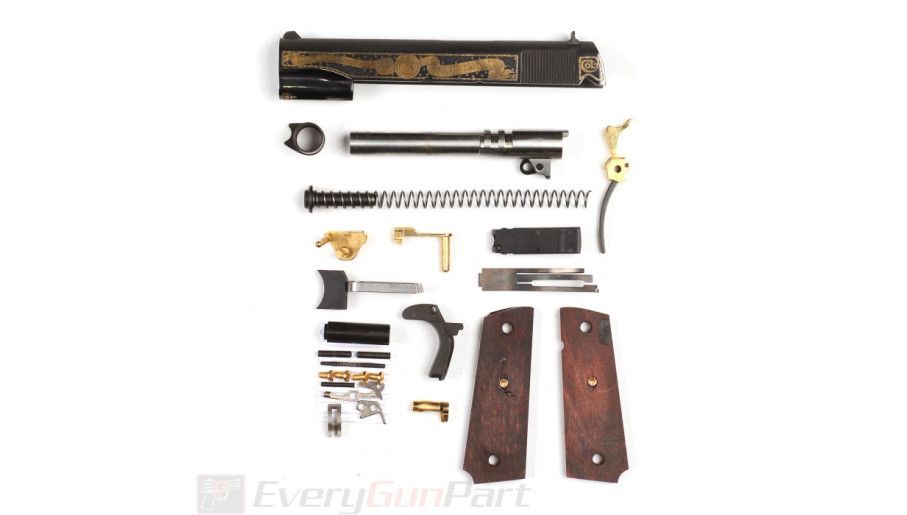
Essential 1911 parts are commonly replaced to maintain reliability, improve performance, or preserve older pistols. For collectors, hobbyists, and gunsmiths, finding the right 1911 parts or a complete 1911 parts kit often comes down to condition, fitment, and availability. Because the 1911 platform has remained in production for more than a century, differences between manufacturers and production eras can significantly affect function and collectibility.
As original components become harder to locate, complete 1911 parts kits continue to provide a practical solution for repairs, rebuilds, and restoration work.
Commonly Replaced 1911 Parts
For 1911 owners, regular maintenance often starts with knowing which components tend to see the most stress. The platform’s design relies on proper spring tension, clean contact surfaces, and consistent part engagement, so small wear points can have a noticeable effect on performance. Looking at these areas first gives collectors, hobbyists, and gunsmiths a practical starting point for inspection.
A quick function check can also reveal early signs of wear before they become larger problems. Rough cycling, inconsistent feeding, weak ejection, or controls that feel loose or uneven may point to components that need closer inspection. These small details are especially important on older 1911 pistols, where part age and previous use can affect performance.
The 1911 platform contains several components that naturally wear through repeated firing, storage, or long-term use. Identifying these parts early helps prevent cycling issues, feeding problems, and unnecessary wear on surrounding components. Depending on the pistol’s condition and intended use, some parts may require more frequent inspection or replacement than others.
Recoil Springs
A reliable 1911 depends on balanced slide movement, and the recoil spring plays a major role in that cycle. When this component begins to weaken, the pistol may show signs such as sharper recoil, inconsistent feeding, or added stress on the frame and slide. Checking spring condition early gives owners a better sense of whether replacement is needed before other performance issues appear.
Recoil springs regulate slide movement and cycling during operation. Over time, weakened springs can contribute to feeding issues, increased frame wear, or inconsistent cycling. Because 1911 pistols rely heavily on proper spring tension, replacing recoil springs at appropriate intervals helps maintain smoother operation and reduce unnecessary stress on the firearm.
Extractors and Ejectors
Consistent extraction and ejection are critical to keeping a 1911 running smoothly, especially during extended range use. Even small issues with extractor tension or ejector wear can cause stoppages, weak ejection patterns, or failures to cycle properly. Paying attention to these components early can help prevent more noticeable reliability problems later on.
Extractors and ejectors play a direct role in cartridge extraction and ejection. Improper extractor tension, chipped edges, or worn components can lead to failures to extract or inconsistent ejection patterns. Routine inspection and adjustment are often important for maintaining dependable operation on the 1911 platform.
Magazines and Magazine Components
Reliable feeding on a 1911 depends heavily on magazine condition and proper spring pressure. Even when the pistol itself is functioning correctly, worn feed lips or weakened magazine springs can create cycling problems that affect overall performance. Because magazines are often one of the most heavily used components, they deserve regular attention during routine maintenance and inspection.
Magazine springs, followers, and feed lips can wear over time, especially with extended use or improper storage. Many feeding issues on 1911 pistols can be traced back to worn or damaged magazines, making regular inspection an important part of routine maintenance.
Safeties and Small Controls
The controls on a 1911 are handled constantly during loading, firing, and routine operation, which means they can gradually wear out over time. Loose engagement, inconsistent movement, or worn contact surfaces may affect both handling and overall function. Inspecting these smaller controls regularly helps ensure the pistol continues operating safely and consistently.
Thumb safeties, grip safeties, slide stops, and other controls may experience wear through repeated handling or long-term use. Replacing worn controls helps maintain proper engagement and overall handling consistency.
Barrels and Barrel Bushings
Accuracy and consistent lockup are closely tied to the condition and fitment of the barrel assembly. As a 1911 sees more use, wear between the barrel, bushing, and slide can gradually affect shot consistency and overall performance. Paying attention to these areas is especially important on older pistols or collector-focused builds where maintaining proper fitment matters.
Barrels and bushings influence both lockup and accuracy within the 1911 platform. Wear or improper fitment can affect precision and overall performance, particularly on older or heavily used pistols.
Internal Pins and Springs
Small internal components may not receive as much attention as barrels or safeties, but they still play an important role in overall function. Springs and retaining pins help control timing, trigger operation, and firing consistency throughout the pistol. When these smaller parts begin to wear or lose tension, reliability issues can develop gradually over time.
Smaller components such as firing pin springs, sear springs, and retaining pins are often overlooked during maintenance. Inspecting and replacing worn internals can help prevent avoidable reliability issues over time.
Sourcing a 1911 Parts Kit
Choosing the right 1911 parts kit starts with understanding the pistol’s exact configuration and the goal of the project. A kit intended for a modern range pistol may not be the best fit for a surplus rebuild or collector-focused restoration. Looking at the kit through the lens of fit, function, and intended use helps narrow the options before any parts are purchased.
Sourcing a 1911 parts kit requires more than simply matching the firearm model. Because the platform has been produced by numerous manufacturers across multiple generations, differences in tolerances, dimensions, and component styles can affect fitment. Some parts may also require additional fitting depending on the pistol and intended use.
Confirm Manufacturer Compatibility
Different 1911 makers can use slight variations in dimensions, frame cuts, and component designs, even when parts appear similar at first glance. These differences matter when selecting a kit, especially for older pistols, surplus models, or firearms that have already been modified. Checking manufacturer details early helps reduce the risk of ordering parts that require more fitting than expected.
Not all 1911 components are universally interchangeable. Before purchasing a kit, verify manufacturer specifications, frame size, and model variations carefully. Even parts labeled as “drop-in” may require fitting on certain pistols depending on tolerances and production differences.
Review Included Components Carefully
Not every 1911 parts kit includes the same level of completeness, which is why reviewing the included components is an important step before purchasing. Some kits are intended for basic repairs, while others are designed for more involved rebuilds or restoration work. Understanding exactly what is included can help buyers avoid delays and identify any additional parts that may still be needed.
Some 1911 parts kits may include only internal components, while others contain slides, barrels, or magazine assemblies. Reviewing part lists carefully helps buyers understand what is included before starting a project.
Evaluate Overall Condition
A used or surplus 1911 kit should be evaluated with the same attention a buyer would give to the pistol itself. Parts that look serviceable in photos may still show signs of heavy use, improper fitting, or storage-related damage once inspected closely. Checking condition early helps determine whether the kit is a practical choice for the intended repair, rebuild, or collector project.
Wear, refinishing, corrosion, or previous modifications can all affect long-term usability. Reviewing condition details carefully helps set realistic expectations before purchasing surplus or used components.
Consider Intended Use
The best 1911 parts kit depends on what the buyer plans to do with the pistol once the project is complete. A kit meant for regular range use may call for different priorities than one intended for a historically accurate restoration or collector display. Thinking through the final purpose first helps guide decisions around condition, originality, and replacement needs.
A range build, defensive platform, collector restoration, or surplus project may all require different component priorities. Selecting a kit that aligns with the intended use helps support more consistent results.
Research Additional Part Availability
Some 1911 projects require more than the parts included in the initial kit, especially when working with older, surplus, or less common variants. Small components like pins, springs, safeties, or bushings may need to be replaced later as the project moves forward. Checking availability ahead of time helps buyers avoid getting stuck mid-repair or mid-restoration.
Certain older or discontinued 1911 variants may require hard-to-find replacement parts later in the project. Understanding long-term part availability helps reduce sourcing difficulties down the line.
Hard-to-Find and Obsolete 1911 Parts for Collectors
For collectors, the challenge is often less about finding any 1911 part and more about finding the right part for a specific era, manufacturer, or configuration. Small details like finish, markings, machining style, and original production features can make a major difference in how well a component fits a collector-focused build or restoration. That makes sourcing obsolete 1911 parts a more careful process than simply replacing worn components.
Collectors working with military surplus or early-production 1911 pistols often encounter parts that are no longer widely manufactured or easily sourced. Original barrels, hammers, safeties, sights, and period-correct controls may vary depending on production year, military contract, or manufacturer specifications.
Matching serial ranges, proof marks, and original finishes often helps maintain period-correct appearance and overall collectibility. While reproduction parts may function properly, many collectors still prioritize original production components whenever possible.
Preservation and Documentation for 1911 Parts
For collectors and restoration-focused owners, preserving 1911 parts is about more than keeping components usable. Original finishes, markings, and small details can help tell the story of a pistol’s production era and ownership history. Taking time to document and care for these parts properly helps maintain both their practical value and collector appeal.
Proper preservation helps protect both the condition and collectibility of 1911 parts, especially on older or military surplus pistols. Storage conditions, cleaning methods, lubrication practices, and restoration decisions can all affect long-term condition over time.
Store Parts in a Controlled Environment
Humidity and temperature fluctuations can contribute to corrosion and finish deterioration. Storing components in a dry, climate-controlled space helps reduce unnecessary wear during long-term storage.
Avoid Aggressive Cleaning Methods
Harsh chemical cleaners or excessive polishing can damage original finishes and markings. Gentle cleaning methods are often preferred when maintaining collectible 1911 components.
Keep Documentation and Provenance Records
Original manuals, military documentation, serial records, or purchase history can help support authenticity and collector interest. Maintaining records also helps track restoration work and replacement history over time.
Organize Small Components Carefully
Pins, springs, safeties, and other small internal parts can be easily misplaced during maintenance or restoration. Organizing components properly helps simplify reassembly and prevent unnecessary part loss.
Using labeled containers, parts trays, or small bags can make a big difference when working with 1911 components. Keeping related parts grouped together also helps track what came from the original pistol, what has been replaced, and what may need further inspection before reassembly.
Inspect Parts Periodically
Routine inspections help identify corrosion, spring fatigue, wear, or environmental damage before more serious issues develop. Monitoring condition over time also helps maintain smoother operation and prevent avoidable reliability problems.
Find Authentic 1911 Parts and Kits at EveryGunPart
EveryGunPart offers access to a wide range of 1911 parts and 1911 parts kits for collectors, hobbyists, gunsmiths, and restoration projects across multiple platform variations. Explore our selection of 1911 parts and kits today.
This information is provided for educational purposes only. We recommend consulting a professional gunsmith for any repairs, rebuilds, or modifications.
–
References: