
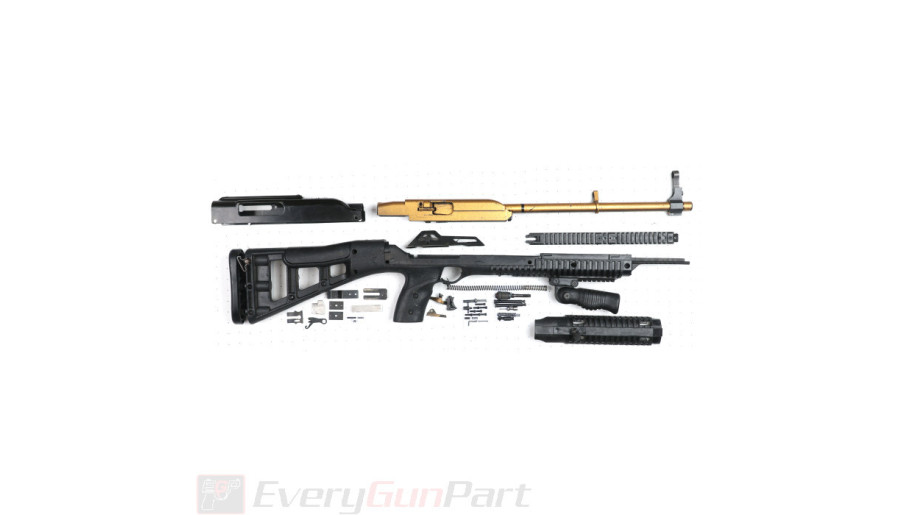
Rare gun parts and obsolete firearm parts play an important role in preserving collectible firearms, restoring discontinued platforms, and maintaining historical authenticity. For collectors and restoration enthusiasts, locating the correct component often requires research, patience, and careful verification before a purchase is made.
As firearm models age and production ends, replacement parts become increasingly difficult to source. Original components may disappear from traditional supply channels, while reproductions and modified parts become more common in the marketplace. This can make it challenging to determine which parts are appropriate for a restoration project and which may affect historical accuracy.
Successful sourcing often comes down to understanding rarity, identifying authentic components, and working with trusted suppliers. A careful approach can help collectors preserve both the condition and historical significance of the firearms they maintain.
What Makes a Firearm Part “Rare” or “Obsolete”?
Not all difficult-to-find firearm parts are considered rare. In many cases, a component becomes obsolete simply because the firearm platform is no longer in production. As manufacturers discontinue models and replacement inventories decline, parts that were once widely available can become increasingly difficult to locate.
Rare firearm parts often involve additional factors beyond availability. Limited production runs, military contract variations, manufacturer-specific markings, and historical significance can all contribute to rarity. A part may also become highly sought after when it is associated with a collectible firearm that remains popular among enthusiasts.
Condition plays a major role as well. Two identical parts may have very different collector value depending on finish condition, originality, markings, and overall preservation. Components that retain original factory features are often more desirable than refinished or heavily modified alternatives.
For collectors, rarity is frequently tied to authenticity. An original production component may carry significantly more value than a modern reproduction, even when both perform the same function.
Where to Find Authentic Military and Vintage Components
Finding authentic vintage and military surplus firearm components often requires searching beyond traditional retail sources. Many collectors spend years building relationships with suppliers, collectors, and restoration communities that specialize in older firearm platforms.
Military surplus inventories remain one of the most common sources for discontinued and hard-to-find components. As firearms are imported, decommissioned, or broken down into parts kits, original components may enter the collector market. Availability varies significantly depending on the platform and production history.
Specialized firearm parts suppliers also play an important role in preserving access to older components. Dealers who focus on military surplus, vintage firearms, and discontinued models often maintain inventories that would be difficult for individual collectors to assemble on their own.
Collector networks continue to be another valuable resource. Firearm collectors frequently exchange information about production variations, part identification, and sourcing opportunities. These communities often help enthusiasts locate components that rarely appear through conventional sales channels.
How to Identify Legitimate Surplus Parts
Manufacturer markings provide one of the strongest indicators of authenticity. Original inspection stamps, proof marks, serial ranges, and production identifiers can often be compared against historical references and factory documentation. Small details frequently reveal whether a part aligns with a specific production period.
Finish characteristics can also provide valuable clues. Original machining marks, wear patterns, and production finishes often differ from modern reproductions. While refinished parts may remain functional, they may not provide the same collector value as original examples.
Physical condition should be evaluated carefully before purchase. Corrosion, pitting, cracks, excessive refinishing, or evidence of modification can affect both collectibility and long-term usability. Detailed photographs and accurate descriptions are often valuable when evaluating components remotely.
The Role of Collectors in Preserving Firearm History
Collectors play an important role in preserving firearms that might otherwise disappear from circulation. By maintaining original components, documenting production variations, and restoring historically significant platforms, collectors help preserve pieces of firearms history for future generations.
Many restoration projects depend on locating rare or obsolete firearm parts that accurately reflect the firearm’s original configuration. Matching markings, correct finishes, and period-appropriate components help maintain historical consistency while preserving collector interest.
Documentation is equally important. Serial number records, manufacturer information, military history, and restoration notes help create a more complete picture of a firearm's background. These records often become just as valuable as the physical components themselves.
The continued interest in military surplus firearms, discontinued sporting rifles, and vintage handguns demonstrates how collectors contribute to preserving firearm history. Their efforts often keep historical firearms operational, documented, and available for future study and appreciation.
Start Your Search for Rare Gun Parts Today
Finding the right part often comes down to knowing what matters most for the project, from originality and condition to platform compatibility. EveryGunPart gives collectors and restoration enthusiasts access to a wide range of firearm parts and kits for discontinued, vintage, surplus, and collectible platforms.
Explore available rare gun parts and obsolete firearm parts from EveryGunPart to find components for your next restoration, collection, or preservation project.
Disclaimer: This information is provided for educational purposes only. We recommend consulting a professional gunsmith for any repairs, rebuilds, or modifications.
—
Reference: